

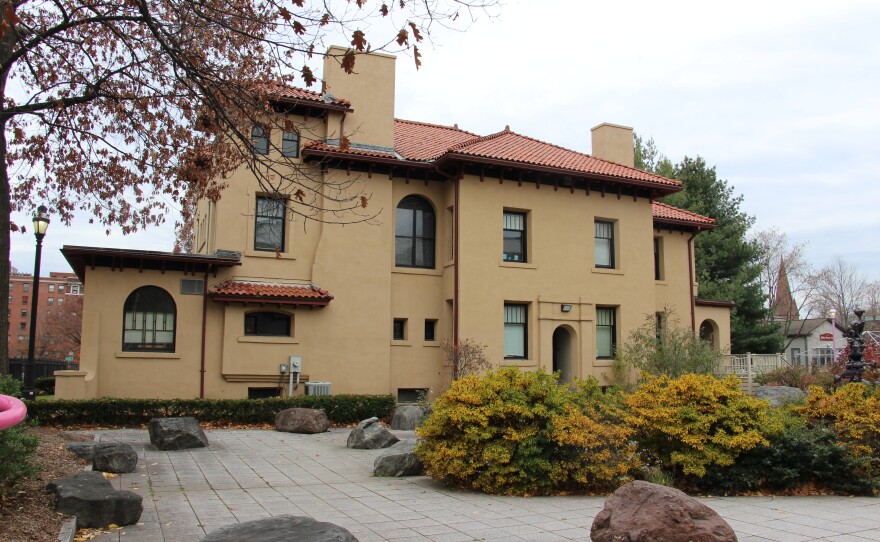

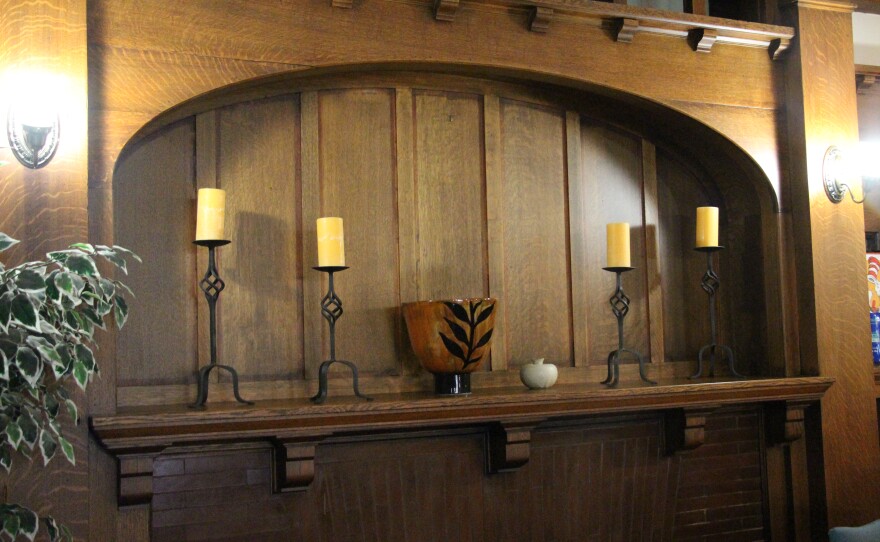


A historic building in Springfield's downtown has been renovated through a collaboration with the Springfield Musems and the city.
Recently Mayor Domenic Sarno, Springfield Museums President Kay Simpson and numerous members of the City Preservation Community and other city officials gathered together to celebrate the completion of the restoration of the historic Dr. Phillip Kilroy House.
The Kilroy House, which is listed on the National Register of Historic Places, was built in 1905 as a residence and office of Kilroy, a renowned doctor from Ireland. He was a neurologist, dermatologist, and psychiatrist. But first, George Merriam lived on the land in a house, which was demolished in 1880 after his death. That same Merriam who along with his younger brother Charles opened a publishing company here in Springfield, and later bought the rights to continue the legacy of publishing Noah Webster’s dictionary.
Organizers said the restoration of the Kilroy House highlights the city's history.
“Well, I think the historic architecture of the city of Springfield or any community is so important," said Simpson. "It's meaningful. It really is a way of seeing the layering of time in any community. Just what was important, the values and the esthetic sensibility of people that live in particular communities.”
Despite the general focus shifting away from the urgency to restore and maintain cultural heritage in this country, according to Simpson - there is “an acute sense of how important it is to preserve the history of any place. It's part of placemaking. It is a way of promoting civic pride," she said. “A lot of contemporary construction doesn't have the same variety, but I do feel that in the country and a lot of cities, a lot of smaller towns, you see that people really value historic architecture and want to preserve it."
Bob McCarroll, the chair of the Springfield Community Preservation Committee, also highlighted the importance of the preservation of the historic heritage of Springfield.
“America's history is a series of immigrants coming over each century, a different group. Certainly our buildings give us a sense of place," he said. “These [historic] buildings have a character that modern architecture doesn't have. And it certainly helps give you an idea of where this country was in the past in terms of design.”
The restoration work was funded by the city's Community Preservation Act, and took about five years to complete. Work included asbestos testing, roof tile replacement, stained glass restoration and exterior painting.

